Disclaimer: While we only recommend products we know and love, we want to note we use affiliate links and may earn a commission for purchases made through those links.
In an earlier post, we described how easy creating your own business letterhead can be in Microsoft Word. Well, they say a picture is worth a thousand words, so a video must be worth . . . a whole lot of words!
We really wanted to be able to show how easy some of our DIYs really are, and how better to do that than in live action? (The task of creating letterhead is done in about two minutes.)
So welcome to our first video . . . . Hope you enjoy it!
With many small businesses of necessity reinventing themselves, we thought the most useful approach for us to take at this time in helping small businesses reboot was to highlight certain articles that – when read together – would provide a branding tutorial. (For those readers just getting started rather than restarted, this collection should provide a helpful shortcut, too.)
The Role of a Brand Style Guide https://brandbuildingforsmallbusiness.com/2019/09/17/brand-basics-part-3-the-role-of-a-brand-style-guide/ Once you have completed each of the above activities BUT BEFORE YOU BEGIN BUILDING BASIC TOOLS LIKE BUSINESS CARDS OR LETTERHEAD OR INCORPORATING THE ELEMENTS INTO MARKETING OR ADVERTISING EFFORTS (we’ll provide a refresher on those soon), take the time to create a style guide that puts into writing the most basic rules that must be observed to properly build the visual element of your new brand/rebrand.
Note: Helpful downloadable tools/templates are provided to add extra value to the pieces described above.
Disclaimer: While we only recommend products we know and love, we want to note we use affiliate links and may earn a commission for purchases made through those links.
Every business should have a custom thank you card on file – the piece gives you the opportunity to express appreciation to your customers, employees, business partners, or anyone else deserving of thanks while reinforcing your business’s brand; also, I love gestures that have double-duty impact at minimal (almost no) cost.
So, in case you don’t already have one of these gems saved on your hard drive, I’m going to take you through the process of making a 2-on double-sided 5×7” branded Thank You card in Microsoft Word.
1. Open Microsoft Word and create a New Blank Document. Change the margins of the page by selecting the Layout tab (at the top), clicking the Margins button, selecting Custom Margins, and changing the Top, Bottom, Left, and Right margins to .25 inches.
2. Click the Insert tab (at the top), click Text Box within the Text section, and select Simple Text Box. Click the outline of the rectangle, hover over the center handle of the bottom line, and click and drag downward to increase the size just a bit. Then, right click on the rectangle, choose More Layout Options…, click the Size tab, input a Height of 5”, select Absolute within the Width section and input 7”; click the Position tab and uncheck “Move object with text” from the Options section. Next, right click the rectangle and select Format Shape. Format the Fill as No Fill and the Line as a Solid Line, Black, 1pt in Width, and Dashed. Now your text box is ready to be customized.
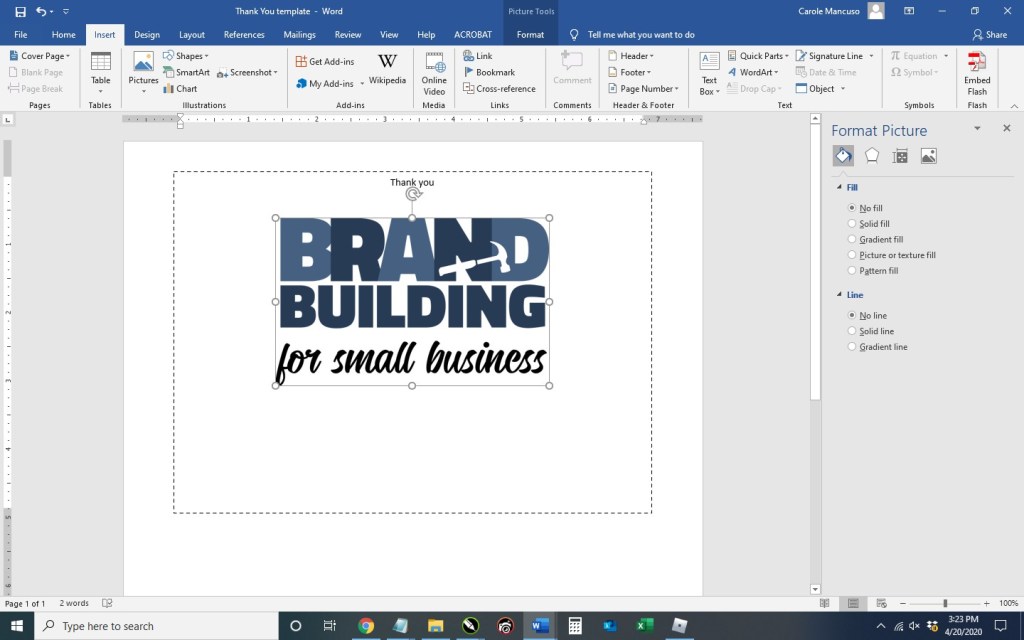
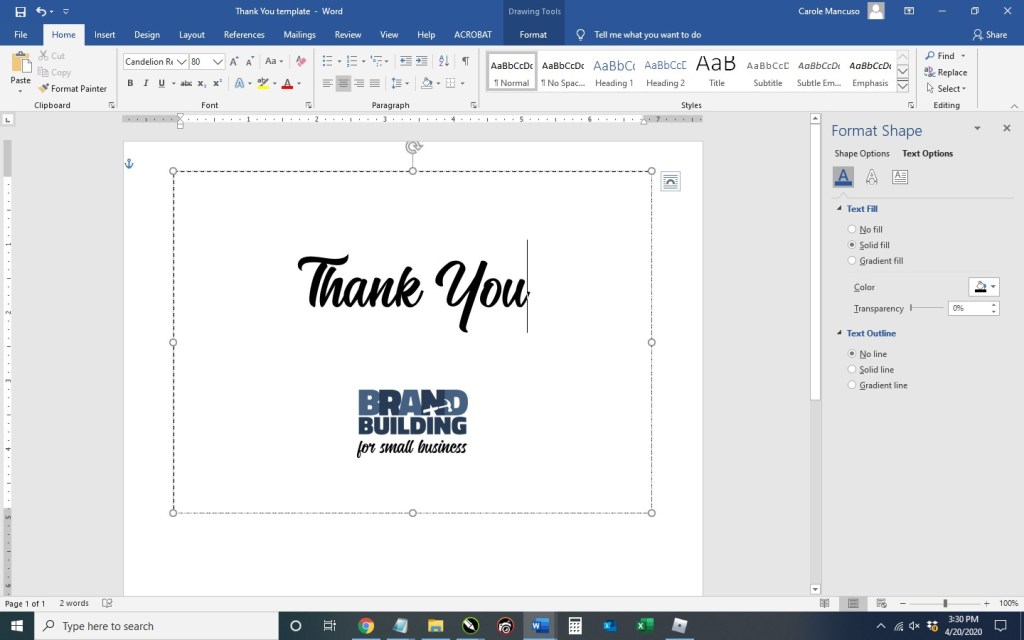
Click the content within the rectangle, which will select everything, and press delete. Set the alignment to centered by pressing Ctrl + E and then type “Thank You”. Press the enter key to advance a couple lines spaces and then insert your logo (Insert tab > Pictures > This Device > browse to the image file for your logo > Insert).
Now you’re obviously going to want to do some formatting. I decrease the size of our logo to 1” in height (the width automatically adjusts proportionately), change the font of “Thank You” to Candellion in 80 pt. and add some line spaces.
3. With the rectangle selected, press Ctrl + C and then Ctrl + V to make a copy. Click and drag the outline of the second rectangle to move about a quarter of an inch from the bottom of the first and horizontally centered on the page (indicated with a green guideline).
4. Duplicate the page: press Ctrl + A to select all the content on the page, press the Insert tab (towards the top), click Blank Page in the Pages section (at top left), and then Ctrl + V to paste the content from the original page onto the new page.
Next, go to the second page and delete the content of the text boxes. You’re going to want to type your message here. (I used the Calibri font in size 11.) Copy and paste the content from one text box to the next (or type different content) and then remove the border of each box. (When you print double sided, the printer will offset the reverse side some small amount and the boxes won’t line up perfectly; therefore, you can just leave the boxes on the front as your cutting guide.)
5. Save your file, print double sided on card stock, and cut!
During the pandemic, has anyone not heard the expression . . .
For work.
For family . . . to stay in touch with members during this time of enforced isolation.
For entertainment . . . as celebrities find new ways to reach out to their audiences. (Everyone catch the cast of Hamilton performing a number with each member in a different remote location?)
What does ZOOMING have to do with brand building? Well, the app is another tool (a particularly useful one right now) for communicating with employees and customers – either singly or in groups. Much can be accomplished via video conferencing.
While the term and app ZOOM might be relatively new, various forms of desktop videoconferencing have existed for many years.
About a decade ago, I started supervising several employees who worked remotely from home – in fact, mostly from different states. Daily meetings using this kind of technology enabled us to keep in touch in a very immediate way – going over current projects, brainstorming, and planning for future tasks. The application we used (though not ZOOM) featured desktop screen sharing—allowing us to share files and make changes interactively, which eliminated one key obstacle that needed to be overcome for remote activity to be as effective as local.
Similarly, my daughter studied abroad back in the early 2000’s. Weekly Skype video calls made this period much more tolerable for us.
ZOOM has already made a huge impact upon the off-premises workplace . . . so I suspect every business owner should become somewhat familiar with the powerful potential of this tool and be able to participate in meetings as well as initiate them. By the way, getting started with ZOOM is free.
Note: While ZOOM is the app I’ve heard most commonly mentioned during these days of isolation and mandatory business closures, be aware that other programs with similar features are available. Skype, WebEx, GoToMeeting, and Microsoft Teams are just a few.
Getting Started
This brief article is not intended be an in depth ZOOM instructional guide . . . but is designed to provide just enough information to pique your curiosity and perhaps give you enough tips to approach your first experience without trepidation.
If you are being invited to participate in a scheduled ZOOM meeting, you will get an e-mail that includes a link to click to join the meeting. Upon doing so, a page will be displayed that informs you that a download is about to begin. When prompted, click “Run”; you will enter a meeting that has been assigned a several digit meeting name.
Note: If you have already installed a free copy of ZOOM (as explained in the next section below), you will be able to bypass this download by launching ZOOM and “Joining” an existing meeting by entering the multi-digit name.
If you are initiating/scheduling a meeting, you will need to download and install a free copy of ZOOM, which you can do at: https://zoom.us/support/download
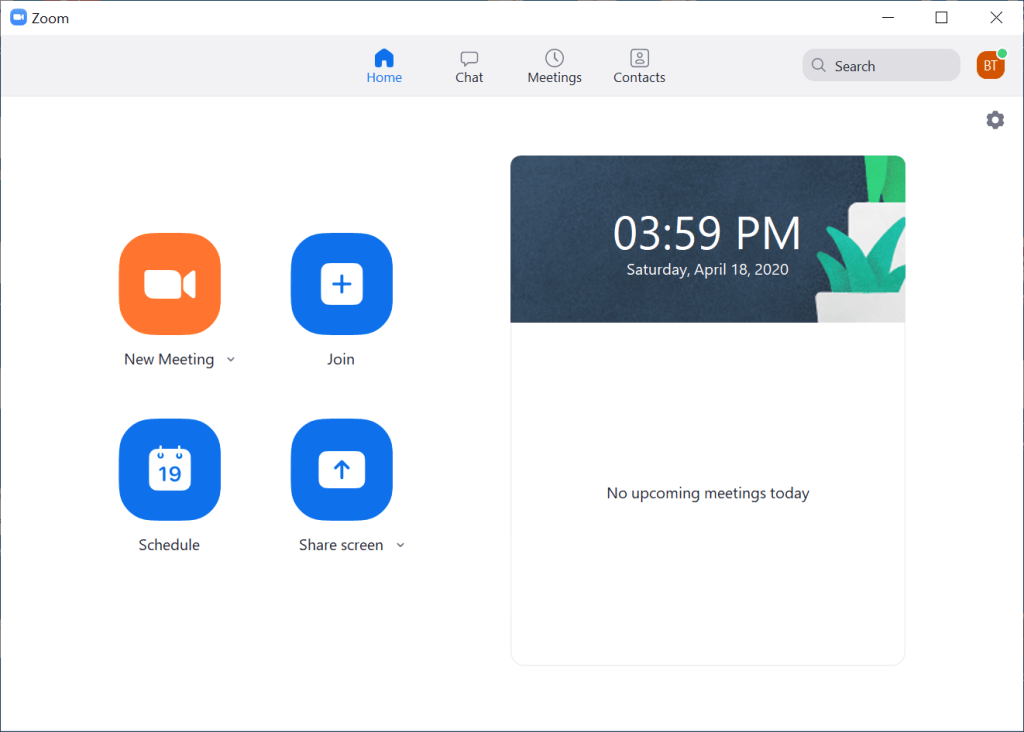
Follow the installation instructions, creating a user name and password. Once your free account has been created, you will be able to access the screen below.
From this point, you can “Join” a meeting by entering the name provided by the organizer, or you can “Schedule” a new session yourself. The process is quick and easy and accomplished by completing this form:
If you have coordinated ZOOM with your calendar, you can generate invitations directly. Otherwise, you can copy the meeting details (including the needed link) into the clipboard and paste the contents into an e-mail to send to the recipients.
When the meeting is due to begin, you’ll be prompted with a selection to start the meeting. As everyone you invited tries to access the meeting, you will want to select the “Manage” option, which will allow you to admit the requestees into the session.
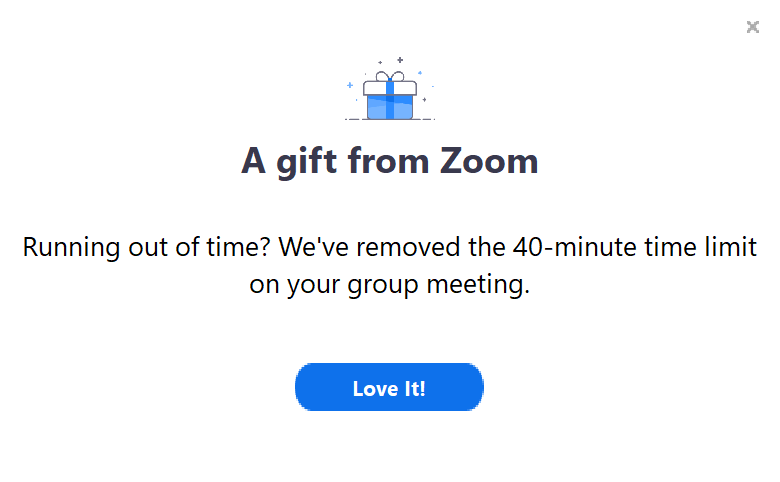
By the way, ZOOM traditionally limited free account holders to 40-minute meetings. However, the creators have recognized the growing need for videoconferencing of all kinds during the pandemic and have generously waived the time limit.
BTW — Kudos to ZOOM on some nice branding efforts
And – Once Again – How Does ZOOM Relate to Your Branding Efforts?
During this time of business closures and regulated isolation (a process that seems likely to continue for some time as businesses are gradually allowed to reopen), videoconferencing plays a key role in maintaining lines of communication with your employees (assuming you have some), customers (to provide a means of face-to-face contact when such opportunities are scarce), and third-party business meetings. As we have seen in recent weeks as whole music concerts and television shows have been orchestrated this way, the uses of ZOOM are limited only by our imaginations.
If you have any questions or comments on this topic, we’d love to hear from you. Scroll down to the comments section at the bottom of this page.
Be safe. Be well.
Observe the guidelines implemented for our collective good!!
As Bob Dylan wrote, “The Times They Are A-Changin’ . . . ” and will likely never be the same. Society cannot go through the kind of dislocations experienced during the current pandemic without being fundamentally altered, though in ways that may ultimately turn out to be good. (For example: During the global quarantine, scientific studies showed that the amount of pollution – especially in hotspots – decreased significantly.)
Hopefully, we have learned many positive lessons during this international “time-out” and developed a new openness to change.
Necessity may have changed your product or service . . . perhaps in a good way.
During this period of quarantine, perhaps (1) your business had to be closed; (2) you remained open but strictly as an Internet/Takeout-Delivery operation; or (3) you were designated as essential to survival and kept going as best you could under adverse circumstances. Regardless of the category that applies to you, your business will have changed during this time.
Once the crisis has ended, business owners will be faced with deciding whether some of the changes should become permanent ones. (For example, you learned that a segment of your operations could be conducted on-line. Do you try to revert to old ways . . . OR do you capitalize on what you learned and maintain or grow your Internet activities – recognizing an opportunity for immediate profit as well as a hedge against a future need to run your business in a state of emergency?)
With changes of the kind we are discussing comes a need for you to consider whether you must also now REBRAND.
REBRANDING
Over the years, I’ve probably been involved in a half dozen or more different rebranding exercises. Some were very necessary AND major, including top to bottom name, logo, byline, etc. adjustments while others were more minor and amounted to some after-the-fact tweaking of branding elements rather than new names and identities.
How do you know when the time has come? You certainly know when:
Your product and/or service is no longer clearly or accurately represented by the brand.
Your branding no longer resonates with your customers. (You may learn of this need by asking via a formal survey or focus group . . . or you may recognize that a problem exists because your customers no longer remember or relate to your name, logo, or product.)
A change of ownership occurs. (Perhaps your old name is no longer applicable or perhaps your new owner has a well-known name you want to promote. For instance . . . when Berkshire Hathaway purchased my employer in 2012, we wanted to make the name of our parent part of our own name so their branding qualities also became ours. While various permissions and legal ramifications must be addressed first, the results justify the effort.)
A new product or service has been added that you want to promote or a secondary activity has now become primary and dominant.
Sales suggest your current brand just is not working well enough.
So . . . how extensive a rebrand is required? For instance:
Is a name change required? If yes, do you want the new name to reflect the old name . . . or be entirely new. (For example, many years ago, the company that employed me was known as “The GUARD Network.” That name was chosen with the expectation of developing a diverse list of products that served many different industries. When that did not happen and the organization dealt strictly with insurance, the name became a bit of a handicap because people couldn’t tell what the company did. The decision was made to add the word insurance, but all parties believed the word GUARD communicated the right branding qualities of security and protection. As a result, the company became GUARD Insurance Group.
Is a new or modified logo needed? When a name changes in a significant way, a new logo is probably required. However, a logo might be changed or tweaked independent of the name. At that same prior employer, our logo was finetuned multiple times across a five-year period – always including a GUARD icon so the benefit of past branding could be maintained . . . but gradually simplifying that image, which became broader and a bit more abstract over time. For an interesting look at the evolution of some famous logos over time (as well as information on debranding), check out Debranding: The Future of Branding.
By-line? A change of by-line is another way to communicate an important adjustment without necessarily scrapping the investment made over time to your logo. (For Example, a restaurant that had started to feature delivery and take-out might start including that information as part of a new by-line – “Take out/eat in.”
Sometimes, the need for a rebrand is obvious . . . and I suspect that will often be the case post-pandemic. If you are not sure about the necessity, take the time to do some research with current and potential customers. In addition to evaluating the necessity, you might learn some useful tips about the correct measures needed to rebrand successfully.
Make No Mistake . . . Rebranding Comes at a Cost
Some of the expenses associated with a rebrand are obvious:
The cost of performing research (surveys, focus groups, etc.)
Cost of reprinting materials with the new logo
Signage changes to reflect the new name
Programming expense associated with changes to the branding elements in the computer system
Cost of promoting the new name via advertising, mailings, and promotional giveaways
Etc., etc., etc. (The list can keep going on and on.)
However, the less obvious costs must also be considered. For example:
Lost labor. Staff time associated with name change activities as opposed to normal duties is an expense.
Lost investment in the old branding. If you succeed in cleverly linking the past and present, perhaps some of that investment will be salvaged. If not – if a total break from the past seems advisable for some extreme reason – your effort in accumulated time and money will be totally lost.
Conclusion
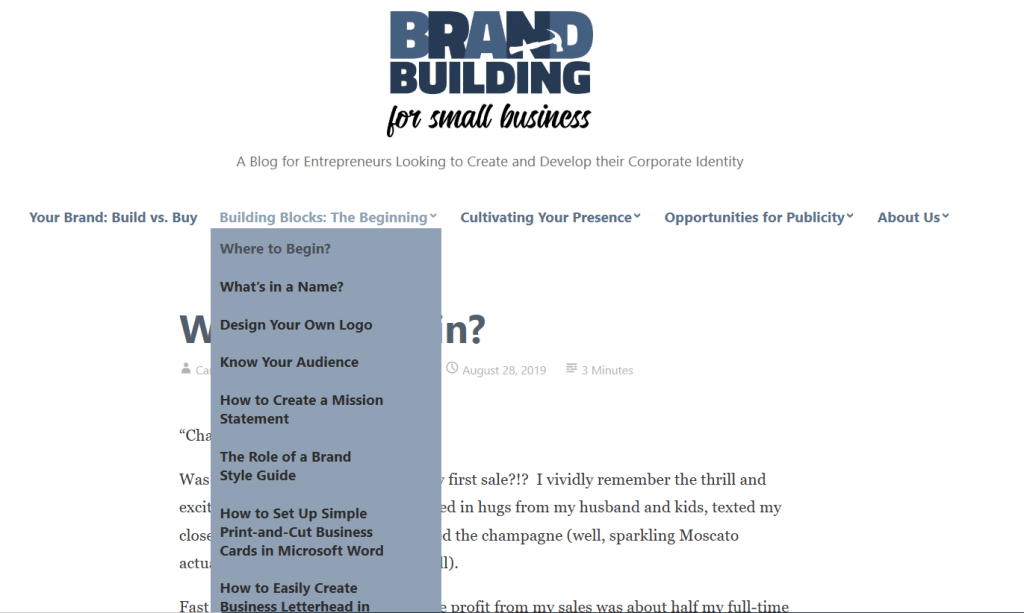
Right now, we are still in the middle of a global health and financial crisis . . . so post-pandemic thoughts may seem somewhat premature. Still, we wanted to introduce this kind of thinking now so you can subconsciously collect information as you go along that might prove useful in the future. When that day comes, we have a number of blog postings that may be very helpful to you. Be sure to revisit “Building Blocks: The Beginning.”
The above illustration highlights just a few of the relevant topics worth reviewing.
Good luck. Stay safe.
If you have any questions or comments on this topic, we’d love to hear from you. Scroll down to the comments section at the bottom of this page.
Today, my goal was to come up with a meaningful article about branding that offered some concrete tips useful in the midst of a pandemic.
Nothing was coming to me. In search of inspiration, I went to google and typed “branding and the pandemic.”
In case you are wondering about the likelihood of those two terms together yielding any meaningful insight, I suggest you search the headline of this article yourself. Ten full pages of results were returned. (BTW—I stopped looking through the pages at that point because I grew tired of the exercise, not because the results stopped matching my request.) The illustration below from page 1 shows some of the many different variations on the theme.
See the bottom of this page for our Special Offer.
Skimming through the headlines as well as a few of the articles, you’ll find that every imaginable subject has been addressed – the good, the bad, and the ugly. While the amount of information is overwhelming, one fact becomes abundantly clear – branding is important during these difficult times and deserving of every bit of attention you can spare, even though no time and opportunity may seem to be available and the subject of branding may be the furthest from your mind and fairly low on your current list of priorities.
Many of these articles are good ones, and we suggest you use some of your many hours of isolation to acquaint yourselves with the range of insight and good advice being made available.
That said, let me ease your mind – we don’t plan to use this article to reinvent any of those wheels. Instead, we will remind you to read our earlier pieces on Crisis Management and building some strategic plans for “Weathering the Storm” and identifying parts of your business that you might be able to re-engineer to function in a mostly online environment.
Assuming you’ve already acquainted yourselves with these bits of advice, today’s suggestion is one that might be deceptively difficult to execute: spend some time on meaningful self-reflection.
Who do you think you are as a company?
What can you and your company do to ease the burden of the pandemic? (ex: make personal protective equipment; serve meals to first responders; deliver products to the elderly)
What impression do you want your customers to take away when linking your company name and the pandemic? Will you be considered a valued member of the community contributing to the greater good? Will you be thought of as being one of those organizations with so much talent and expertise that you were able to adapt your operations and offer a valuable product and/or service to others while existing under pandemic restrictions?
Once you arrive at an honest answer to these questions through this period of self-examination, what measures can you take to make that happen? Consider:
Who you have been (and whether that is who you want to be)
The steps you can take to be perceived in the desired way
The kinds of plans you can put into place to better equip yourself to deal with crises of this kind in the future.
Once you have a clear vision and understand your brand aspirations, we can help identify useful strategies to implement the results of your self-reflection.
Our Offer to You:
Feel like you need a little assist to make this self-reflection a meaningful and useful exercise? If so, we’re happy to help other business owners identify opportunities to adapt their resources and skillset to aid their communities (just one of the ways we can do our part during these hard times). We’ll also work with you on a plan for reinforcing your brand in a positive way while being of service to others. Just let us know a little about your situation in the comments below . . . describe your business and expertise, and we’ll start brainstorming with you.
Be careful. Be safe. Embrace this opportunity to understand yourself and your brand better. When the pandemic does finally end, you’ll be in a better position to resume more normal activities.
Branding is about who you are and who you want to be . . . and the steps to take to make that happen!
I sat down to write an article on the preparation of electronic files for various purposes – commercial printing, publications, the Internet, electronic ads, novelty items, etc. However, we are in the middle of a world-wide health and financial emergency, and my partner and I felt we’d be remiss not to address that subject instead.
When a crisis occurs, you have an opportunity to demonstrate that you are a good corporate citizen and simultaneously cement and communicate your brand to current and potential customers in a positive way.
Developing Your Message
One of your first priorities as a small business owner when trouble strikes is to send your employees and your customers a message about the situation. You need to be empathetic to their circumstances and emphasize that you are all facing the same difficulties because (most of the time) you will be.
You need to provide an overview of the steps you are taking to manage the crisis and (if relevant) explain any modifications being made to your products/services to deal with the situation and address special needs. Finally, you must emphasize the importance of good communication and outline in detail the best ways to contact you with any problems or concerns – phone, e-mail, text messaging, social media etc.
Needless to say, you have to prepare your employees for any changes to their roles due to the crisis, and you should coach them on the proper information to communicate when dealing with the public.
Once you have figured out the correct content of your message, you need to prepare versions for all of the various media you will be using:
[ ] e-mail
[ ] letter
[ ] web site posting
[ ] social media posting(s)
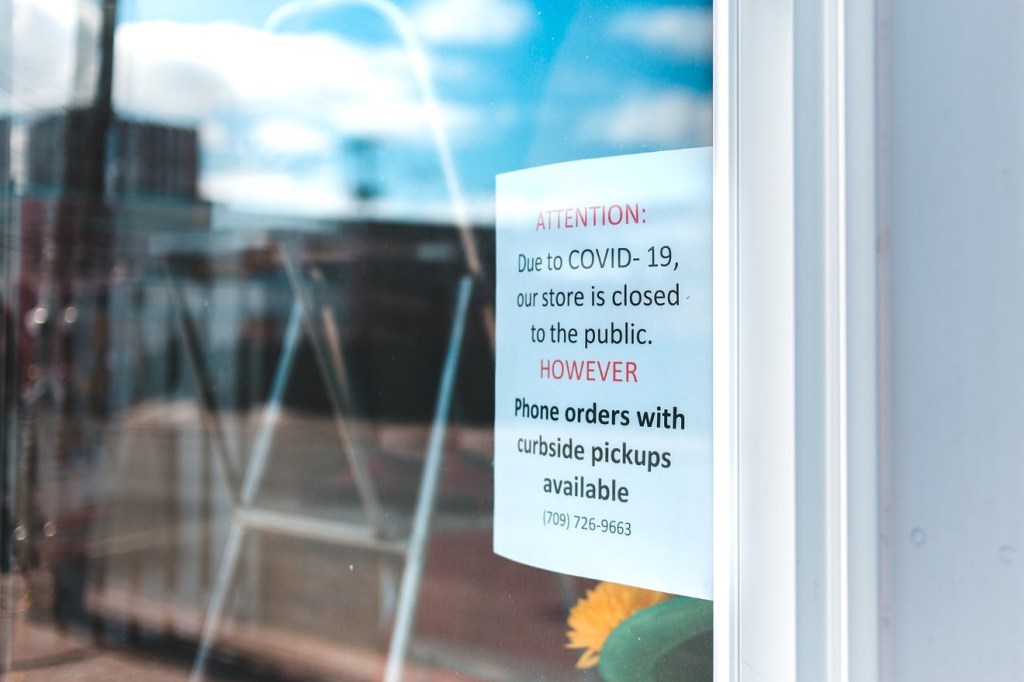
[ ] signage for physical location (including any changes to usual hours) and instructions for getting in touch
[ ] PSA (Public Service Announcements) for local media
[ ] Press releases communicating information of interest to the public
While not all of these vehicles will be appropriate for everyone, every business will need to utilize more than one, remembering that different customers have very different preferences for receiving information.
Memories Are Long
Part of being a good corporate citizen is to honestly assess the part your product/service plays in the community. Are you essential . . . or a luxury? If you are the former, you will need to reassure people that you will continue to serve them with the least possible disruption. You want to be sure to stay away from any language or unintentional suggestion that you are exploiting the situation for profit or gain. Conversely, any steps taken at such times to offer charitable assistance and lend a hand to the community at large are important. While your business might be suffering from a less profitable moment, too – chances are others are dealing with even more difficult circumstances and could use your help.
Memories are long. When conditions improve, your customers will remember your behavior. Did you lend a helping hand . . . or just help yourself?
Be Honest
In all of your communications, be honest and truthful. People have an innate ability to recognize when you are being evasive and less than forthcoming. While we certainly understand that some information is private or cannot be shared due to the likelihood of being misunderstood, you will do your business and your brand the most good by developing a reputation for being the kind of company a person can trust.
While honesty can be difficult in the short-run because hard messages sometimes have to get delivered, the long-range benefits will be worthwhile. People will be inclined to believe ALL of your messaging, which is one of the key benefits of building a good brand.
Be safe. Be well.
Observe the guidelines implemented for our collective good!!
Note: In the midst of a crisis, future planning is probably the furthest from your mind. Nevertheless, planning is also an act of faith and optimism for the future. An upcoming article will explore the reasons all of us should be developing contingency plans for portions of our business that can be conducted online.
Recently, my blogging partner published an article about getting started on Facebook, and she also set up a page for our blog – Brand Building for Small Business. If you followed our lead and did similarly (creating your own site), you’ve probably posted several messages by now . . . and seen little tangible reason for continuing this exercise.
Well . . . the entire message of this article is “Stay the Course!”; you never know who might be paying attention and the kind of impact that person might have on your ultimate success.
Who knows? One day, you just might get kind words from the Oracle of Omaha or some other noteworthy individual that you’d like to pass along!! Keep posting to get your social media platform ready.
My best real-world example that offers proof of the wisdom of this advice happened just a few short years ago. I was working for GUARD (my employer at the time and an affiliate of Berkshire Hathaway). We were just getting started with social media (an intentional delay on the part of our company), and we were experiencing slow growth in the numerical results usually used to measure success – likes, followers, visitors, shares, etc.
We had established a regular schedule (at first weekly; then twice a week shortly thereafter) for posting new content. At that time, my employer was in the middle of a five+ year stretch of 25% per year growth and had new infrastructure needs to accommodate hiring. As part of that process, the company had applied to the state for a significant economic development grant. While that request seemed to have a decent chance of success because many new jobs would be created, lots of viable projects were competing for the same dollars.
Fortunately, we had just closed the books on a very good year. In fact, our run of success had been good enough that the Chairman of our ultimate parent company (Berkshire Hathaway) had elected to give us a “shout out” by name during the heavily publicized and well-attended Annual Meeting of the Shareholders in Omaha, Nebraska. Turns out that when that gentleman, an individual by the name of Warren Buffett, chooses to praise you, people stop and take notice.
Recognizing an opportunity, we transcribed the sound bite and posted a social media mention of the message, quoting Mr. Buffett’s generous remarks. While this content generally got more attention than our low norm at that time, the first person to “like” our message was the individual who would be responsible for evaluating our worthiness for the grant we were seeking!
Did our social media posting make a difference? While we will probably never really know, I can’t help but believe some good was done that more than justified the entirety of the time and effort we had devoted to date to social media.
So . . . the moral of the story (especially during the early stages) is this: you don’t have to produce eye-popping numbers for your effort to be worthwhile and totally justify the invested time and energy. You just have to keep using the platform you’ve created to communicate your message (. . . AND YOUR BRAND!) in a number of new ways . . . and hope that somewhere along the line the right set of eyes will read your words. (Rem: Strong preparation creates opportunity.)
Frankly, I’m an optimist . . . so I’m always imagining all sorts of interesting people reading my words on the other end. Every once in a while, the imagined even becomes reality (and that IS fun)!!
I hope you have a happy and successful New Year in 2020. My partner and I would love to hear from you and explore suggested ways in which we might be of help.
Direct mail/e-mail is not for the faint-of-heart . . . OR for the
impatient. When a campaign is working
well, results tend to be measured in single digits with the difference between
success and failure often just tenths of a point. (Try explaining that to someone and
justifying the value of the effort.)
Despite the negative sound of my opening remarks, I am, indeed, a
strong proponent of direct response tools.
Why?
You have a blank page just waiting to be filled with a refined, well-branded message that can include a sales pitch as well as a reminder about who you are and plan to be – providing a glimpse into your culture.
Direct mail and e-mail are extremely inexpensive and can be repeated many times without a loss of effectiveness, which aids branding through repetition; in fact, by sending your message over and over again to the same list, you ensure your message is heard at the right time – buying time . . . which, in turn, can occur as often as every day or so . . . or as infrequently as once or twice a year.
While the numbers measuring results tend to be low for any single mailing, the cumulative impact can be great as you produce small gains on a very regular basis and retain those new customers over time.
Note:
According to the Direct Marketing Association, the
average response rate for direct mail house lists is 9% and 5% for prospect
lists. However, if your direct mail piece is advertising an expensive or
complicated product, a response rate that is less than one percent is not
unusual. (Responses / Pieces Sent =
Response Rate)
While the quality of your “creative” (i.e., text, art, branding,
etc.) DOES matter as well as the quality of your mailing list, timing may be
the single most important factor in determining your success.
More About the
Message
Direct marketing provides an excellent blank tableau for you to
communicate who you are, what you sell, and the company you hope to
become. Furthermore, you can express
this information in a manner consistent with your culture and the image you
want to project. Beyond that, your
self-portrayal needs to reflect reality to resonate with your audience and,
therefore, be more memorable.
The Headline – Headlines matter and create your first (and often only) chance to grab the attention of your audience. Short, memorable, and descriptive works best . . . but ain’t easy to accomplish!
I developed my first appreciation for the potential impact of the
headline many, many years ago. The
company I worked for had bought an old furniture store and was disposing of the
contents via flash sales conducted by their small group of employees, most with
non-sales jobs.
The first two weekends went great and all of the big, expensive,
and nicer items were sold pretty quickly.
Clearly, we had gotten the word out.
By week three, however, only lots and lots of odd accent items were left
. . . and we weren’t having much luck selling them out.
Our solution: we took out a
large full-page ad in the newspaper (which people actually read back then) that
ran under the headline “Adopt an End Table or Be a Foster Family to a Few
Good Lamps and Chairs!”
Something about the line struck a chord because the crowds
returned the very next weekend, and the majority of the remaining merchandise
was moved. Since then, I always pay
close attention to the headline, very often using that as my starting point
when creating an ad, flyer, or direct mail letter.
Copy (The Message and Offer) –
This point raises one of the great disputes of all time. What sells best? Long copy or short. If you can conclusively answer that question,
your name will be entered into the annals of the direct marketing hall of fame.
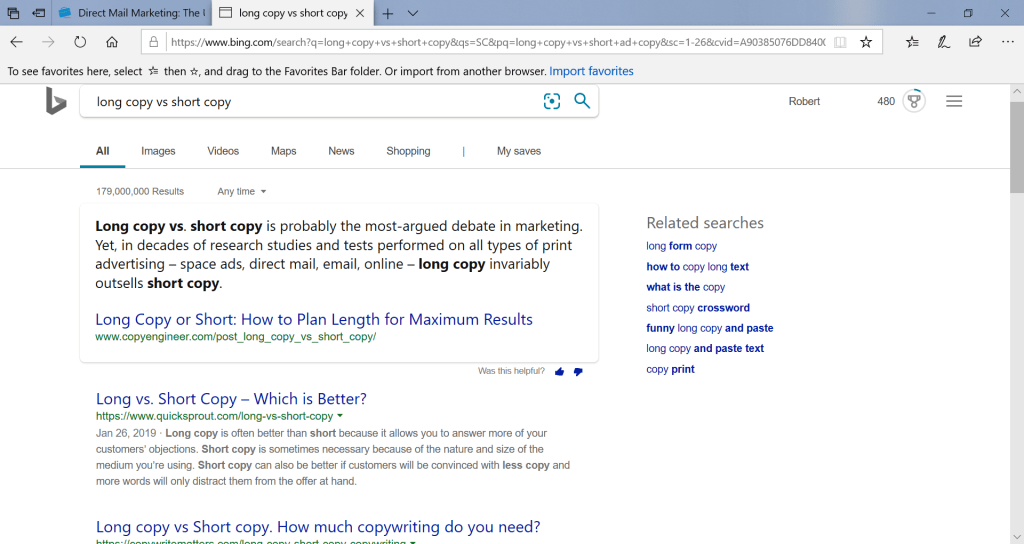
Just search long copy vs. short copy, and you’ll get the general
idea:
Frankly, I’ve used both successfully. Cop-out?
No. My personal preference has
always been long copy . . . and I have identified substantial amounts of expert
opinion in support of the long-copy case (ex:
David Ogilvy in Ogilvy on Advertising – an industry
standard). However, my professional
career has mostly involved parties who believe “no one reads anymore!” . . . so
“bulletize” (another way of saying “dumb-down the content”), though the words
used to express the sentiment are generally more like “keep the wordiness to a
minimum.” (Just writing this paragraph has kicked up my stress level a notch or
two.) In the end . . .
If you are preparing a direct mail piece and answering only to
yourself, I suggest using as many (or few) words as are necessary to make your
point persuasively, remembering that one or two pieces of carefully chosen and
cited data can be the key to establishing credibility and making your point in
the most convincing possible way.
Artwork/Graphical Visual and Format – Your need
for (and selection of) artwork will depend upon whether you are sending just a
letter, just a flyer, or both.
Traditionally, multiple pieces were recommended (though current
conventional wisdom is far more flexible).
Personally, I’ve used all of those approaches in format and have not
noticed a significant difference in the outcome. Other factors – such as the quality of the
list, effectiveness of the message/offer, and timing – seem to be the
determining factors.
That said, artwork – when included – can be an attention-grabbing
element. As a result, choose the most
compelling OR familiar image available.
If you have some well-known quality with a high degree of
recognizability (perhaps your physical location), use that to your advantage
and stick to a picture that capitalizes on a good address. Humor can be successful as well as art that
in some form presents the unexpected.
To state the obvious, always be sure your logo and any byline are
prominently displayed as part of your basic branding of the piece.
Note: While the choice of
traditional mail vs. e-mail will affect your selection and use of some of the
items discussed in this article, your choices can be easily tweaked to work in
either environment. In fact, these
elements should be similar to ensure consistency across various media.
Snail Mail vs. e-Mail – So . . . which works better?
The answer may ultimately depend upon the nature of your mailing
list (with the first question being whether or not e-mail addresses have been
included).
Needless to say, e-mail solicitations are faster, less expensive,
and very immediate – all very attractive qualities. You can:
Link to large volumes of supplemental
materials.
Create custom “landing pages” that
provide an easy (and very trackable) opportunity for immediate response
expressing an interest.
Repeat the process many times.
Get immediate feedback about mailing list
names that are no longer valid and are now undeliverable.
However . . .
In this era characterized by inundations of
electronic messaging and spam e-mail, you can be easily ignored AND DELETED
UNREAD!
Spam and junk mail filters can keep your
messages from being seen by the intended party.
While one might logically guess that the cost, time, and immediacy
of e-mail would doom snail mail to extinction, I have found that certain (often
demographically older) audiences pay more attention to physical mailings. Interestingly, the traditional approach also
has the added benefit of a longer shelf life with parties interested but not
currently at “buying time,” causing them to set aside the printed letter or
flyer for a quick review at a later date closer to the actual time of need,
which gives you the best possible chance of success.
My proof? I’ve had mailings
that produced a response that could be absolutely traced back to a physical
mailing occurring six months before.
While an electronic equivalent to setting a piece of paper aside clearly
exists, I’ve seldom seen evidence of that occurring.
A Direct Response
Project for Our Own Blog
Huh?
Well . . . one of our goals for this blog is to build an audience. As a result, we searched for (and found) a list of associations, agencies, and affinity groups that appear to have a connection to small businesses (https://smallbiztrends.com/2018/05/small-business-associations.html). As a result, we are planning to systematically approach at least some of them via e-mail and/or mail with a request to link our blog from their web sites. Unlike some mailings, our intention is to do just a few at a time to properly manage the kind of follow-up required.
Since our blog is still in the early stages of development, we
will wait until we feel we have accumulated a sufficient amount of
content. (Perhaps 20 or so
articles?) Also, we realize we do not
yet have any meaningful performance data (i.e., visitors, followers, likes,
etc.). So, the letters will initially
have to be created without those key elements that will be added upon becoming
available.
Nevertheless, we have drafted the text of a message and included an offer with the intention of sending out the first few inquiries in the upcoming weeks with plans to revise our message as time passes based on new feedback, performance results, and early results. (We’ll keep you posted. Until then, feel free to comment upon our draft.)
Looking for More
Concrete DIY-Type Information?
At least two more direct response articles are planned for the
upcoming weeks.
Detailed instructions on preparation of a Word
Mail Merge document that can be linked to an Excel address spreadsheet to
generate your own mailing.
An article explaining the various alternatives
that exist for generating a mass e-mailing, including the use of vendors vs.
your own word processing and e-mail programs.
Until then, good luck moving forward with your campaigns.
Other Resources
For information about the typical elements of a direct mail package, see:









 Brand Building for Small Business