Is Brand a Scam . . . or the Real Deal?

Before a business owner invests the time, energy, and resources to systematically build a brand, some skeptics need to be persuaded that all this talk about branding is not a scam on the part of ad agencies and other marketers out to make money.

For starters, no less an authority of the business world than renown entrepreneur Warren Buffett of Berkshire Hathaway fame was recently quoted as saying about the power of brands:  “Give me a $10 billion budget and ask me to bring out another Coca-Cola that makes a dent in Coca-Cola and I can’t do it.”  By inference, this statement seems to suggest that the branding of Coca Cola has a value of at least $10 billion (perhaps more).

Frankly, branding has a longer history than most people realize.

Do an Internet search for the term “history of branding,” and you get an extremely wide variety of responses.  Some talk about the cattle branding done in the 19th century wild west. An organization called Skyward traces the origins back further, saying, “The term derives from the Old Norse word brandr or ‘to burn,’ and refers to the practice of branding livestock, which dates back more than 4,000 years to the Indus Valley.”
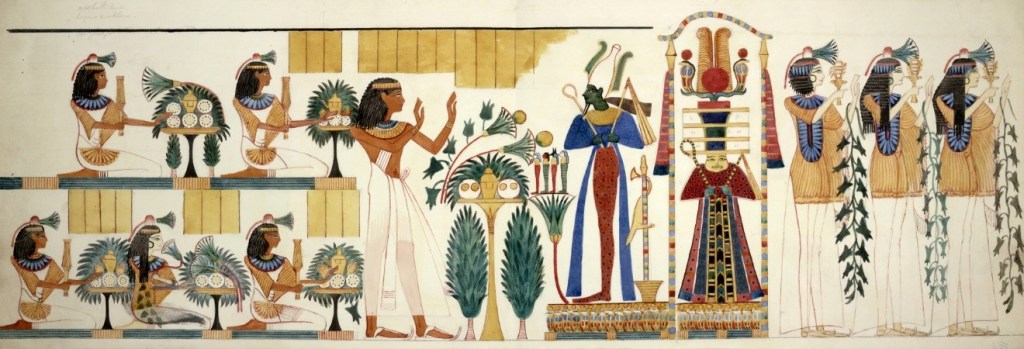
Most sources seem to agree that some form of the concept can be attributed to the Egyptians (and ancient B.C. times) with some credit being given to the Chinese, the Greeks, the Romans, and more due to the marks put on items such as pottery to provide information about the creator and creations.  (For a good historical overview, read Skyward’s essay, “What Is Branding? A Brief History” found at https://www.skyword.com/contentstandard/branding-brief-history/.)

Obviously, the term branding has assumed a much different and more complex identity during the second half of the 20th century.  As Taylor Holland notes in the Skyward essay, “The meaning of the word has evolved so much over the centuries that even people who do it for a living have never made the connection between modern marketing and livestock.”

Contemporary branding is a 20th century phenomenon.  The advertising industry is generally credited with broadening the definition to include establishment of a corporate identity and promotion of sales.  During the “Golden Age of Advertising” in the 1950’s and 60’s, the concept started to encompass the creation of a unique personality for products – giving them qualities that often elicited an emotional response that helped foster brand loyalty.

More recently, we have seen the concept expand even further to focus on something called “the brand experience” with customer service and ease of use playing increasingly prominent roles in effective branding.  (For a quick overview of this process of evolution, see “20 milestones in the history of branding” – https://www.creativebloq.com/branding/milestones-history-branding-91516855.)

So . . . What Conclusions Can Be Drawn?

If the act of branding is, indeed, an elaborate scam, the charade is one that dates back thousands of years, has hoodwinked one of the 20th century’s most astute businessmen, and has evolved to reflect the needs of a changing world.  While the act of branding has certainly become more complicated (as has the modern world), the process still involves quick identification of a product through visual symbols such as a logo and the association of those symbols with positive attributes.  These characteristics will, in turn, always be useful to companies that must continually reprove themselves to their existing customers . . . while constantly being on the lookout for new ones.

Not Convinced?

Perhaps you are one of those people who need some numbers before you can believe.  For instance:
“Consistent branding across all channels increases revenue by 23%.”
From 80+ Branding Statistics You Should Know For 2020
– Ryan McCready, June 19, 2019.

If you are one of them, check out these 80 facts and many others found in articles made available by searching “data proving the importance of branding.”

Basic SEO: Make Sure Your Web Site is Included in Search Engines’ Index

Photo by PhotoMIX Ltd. on Pexels.com

SEO or Search Engine Optimization, in a nutshell, helps your web site be found online.

The very first step is to make sure search engines know your web site exists.  Or, more specifically . . .

CHECK WHETHER YOUR WEB SITE IS INDEXED

Search engines “crawl” the internet, reviewing each web page found, and then organize the content in their “index” to provide as future search results based on the relevancy to keywords searched.  If you’re not in the search engine’s index, you’re virtually invisible to searchers or, as applicable to us small businesses, potential customers.

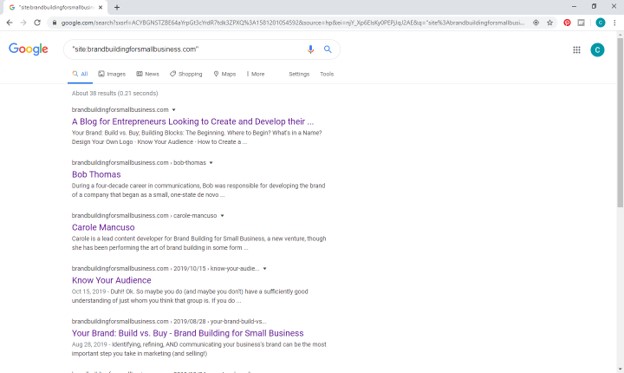
Seeing whether your web site is in their index is easy.  From any search engine, search for “site:yourwebsite.com”.  (In our case, we search:  site:brandbuildingforsmallbusiness.com.)

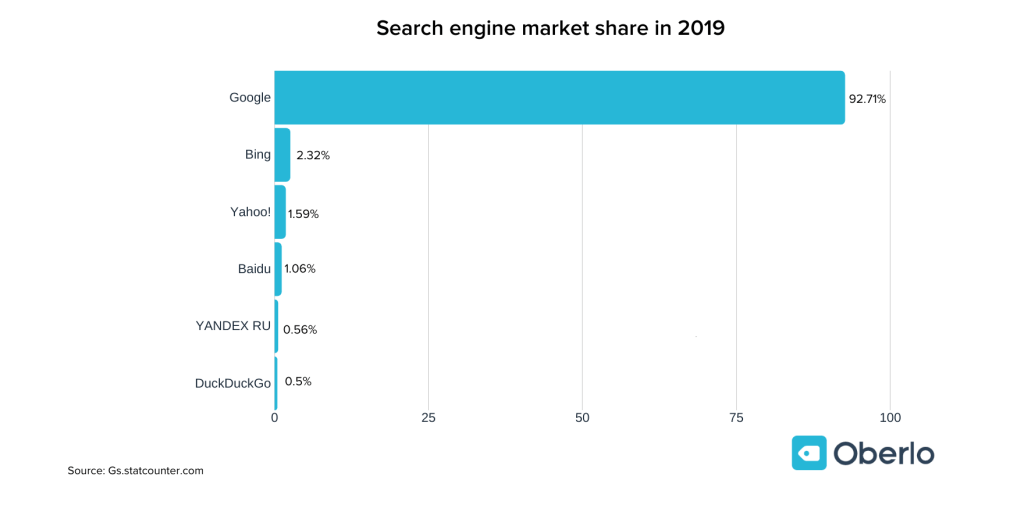
In our check, we found that most of our blog is a part of Google’s index.  Since Google performs the lion’s share of searches (see below), we’re going to focus on them.

WHAT TO DO IF YOUR WEB SITE IS NOT INCLUDED IN THE INDEX?

According to Google, a few common reasons explain why a site might not appear in search results.  The most popular issues and some potential solutions are listed below for you.

  • PROBLEM:  Other web sites do not link to your site, and/or your web site is simply too new.
  • POSSIBLE SOLUTION:  You can create pages for your business in social media venues (like Facebook, Pinterest, etc.) and include links to your web site. 
  • POSSIBLE SOLUTION: Find popular web sites that could benefit from content on your web site.  Once you’ve identified some possible targets, send an email or letter to the appropriate person (usually a contact page will have the needed information) and explain why you believe their web site would benefit from linking to yours.  Be sure to follow up.
  • POSSIBLE SOLUTION:  Get online reviews.  If applicable to your products or services, create a page for your business on popular review sites (google, yelp, etc.) and seek out reviews.  If you know of a particularly happy customer that has a web site or a strong social media following, ask for a plug to your business.
  • POSSIBLE SOLUTION:  Think about business contacts that could help you promote your web site.  For instance, you may use intermediaries or suppliers that have an appropriate place on their web site to link to your business.
  • POSSIBLE SOLUTION: And last but not least, post quality content and be patient.  “If you build it, they will come.”  Whether a baseball field or a web site that adds unique value to the digital world, people will eventually find you, and they will link to your web site.
  • PROBLEM: Google’s ability to crawl the site has been hindered by Flash, other specialized technology, or a lack of text.
  • POSSIBLE SOLUTION: If your web site utilizes Flash or another specialized technology, you may want to consider a redesign in HTML.  While this could be a significant undertaking, you want your web site written in a language that search engines understand.
  • POSSIBLE SOLUTION: Review the image to text ratio on your web site.  Do you have enough words for search engines to fully understand the content for each page?  If not, you can either replace your images with text (try to use formatting to achieve that same visual appeal) or supplement the images with explanatory captions.  Remember that you’re communicating with your web site’s audience as well as search engines.
  • PROBLEM: Your web site generated an error when Google tried to crawl your web site.
  • POSSIBLE SOLUTION: The most common reason for this problem is secured content.  If your web site requires a log-in to enter the site, Google won’t be able to enter either.  Consider restructuring your web site so that your more general pages are open to the public and only the pages truly requiring a log-in get that restriction.
  • POSSIBLE SOLUTION: You can also register your web site with Google’s Search Console, which can give you some more specific information about the errors generated.

Once you feel like you have sufficiently addressed your particular problem, ask Google to crawl and index your web site.

If you have any questions or comments about getting included in Google’s index, we’ve love to hear from you.  Scroll down to the comments section. . . .

The next goal of course is to improve your web site’s search ranking, which will be the focus of a future post. 

Special Note:
Brand Building for Small Business has been identified by Feedspot (www.Feedspot.com) as one of the Top 100 Branding Blogs. Feedspot provides “the most comprehensive list of branding blogs on the Internet” so we are pleased to be part of that group.  To learn more, visit https://blog.feedspot.com/branding_blogs/.

In Search of the Holy Grail (of Branding)

In Search of . . .

Customer Loyalty!

Why is this quality so very important . . . and the ultimate goal of all branding activity?

Once you achieve customer loyalty, consumers will:

  • Choose your product or service over others . . . regardless of your competitors’ behavior.
  • Select you without price shopping . . . and perhaps even be willing to pay a bit more.
  • Become repeat buyers – often for years and potentially crossing multiple generations (an impressive brand success).
  • Recognize your product by your logo and other branding elements without a reference to your name. 
  • Become your best sales force – promoting your product/service through word of mouth.
  • Expect you to make good on brand promises – those qualities you have promoted that have resonated with your audience.
  • Present you with growth opportunities – in part through cross sales.

In other words, once you have achieved customer loyalty, your sales acquisition costs should decrease significantly because less marketing and sales expense should be required to generate the desired revenue.

So . . . How Do You Create Brand Loyalty . . . and Avoid Getting Lost in the Crowd?

While I’m sure you’ve heard about (and probably been pitched) loyalty/incentive programs, such tools are just one of many that are available.

Note:  Loyalty programs encourage shoppers to return to stores where they frequently make purchases. Some of the incentives may include advanced access to new products, additional discounts, or sometimes free merchandise. Customers typically register their personal information with the company and are given a unique identifier, such as a numerical ID or membership card, and use that identifier when making a purchase. (Investopedia) Want to learn more?  Check out these seven examples of some of the best:  https://www.leadquizzes.com/blog/7-examples-of-customer-loyalty-programs/

That said . . .

Instead of focusing on those prepackaged plans, you really just need to expend your energy on building a great brand and consistently promoting your strengths via consistent implementation of the basic branding elements you’ve put into place. Specifically, you should:

  • Provide a customer service experience that reflects your brand. 
  • Utilize social media to establish an online presence.
  • Build a visual brand identity that reflects your products/services and overall operations . . . so the message you are trying to send reflects reality and stands a chance of resonating with your audience.
  • Establish credibility (and trustworthiness) by making good on your brand promises.
  • Incorporate best practices in all that you do AND be the best.
  • Know your audience and make sure your products/services satisfy their needs . . . even as those needs may change.
  • Maintain strict consistency in your spoken, written, and visual message – enhancing recognition.
  • Focus on creating loyal, repeat customers who will continue to frequent your business.  (Why so important . . . ?)

THE LAW OF THE VITAL FEWThe Pareto Principle states that 80% of your company’s future revenue will come from 20% of your current customer base, making it imperative that you focus on creating loyal, repeat customers that will continue to frequent your business. (Written by the Forbes Agency Council)

  • Make positive contributions to society part of your culture.  (To do so can enhance the environmental, social, and governance aspects of your operations, which in turn, enhances the sustainability of your success.)
  • Add extra value above and beyond the basic product/service provided.
  • Check in with your customers regularly via surveys, conversations (research groups), calls, etc. AND really listen to them.

Don’t Be Brand X!

If your business has achieved customer loyalty, you’ve mastered one of the key measures of success – your products and services are no longer generic (. . . and interchangeable) in the eyes of you audience.  You are no longer just another Brand X!  You have a personality and identity; you’ve established a relationship with your customer.

As this article suggests, this goal is accomplished in many ways, including a consistent, well-developed branding program that sends a clear message to your intended audience.

Special Note:
Brand Building for Small Business has been identified by Feedspot (www.Feedspot.com) as one of the Top 100 Branding Blogs. Feedspot provides “the most comprehensive list of branding blogs on the Internet” so we are pleased to be part of that group.  To learn more, visit https://blog.feedspot.com/branding_blogs/.

Branding Through Customer Service

Special Note:
Brand Building for Small Business has been identified by Feedspot (www.Feedspot.com) as one of the Top 100 Branding Blogs. Feedspot provides “the most comprehensive list of branding blogs on the Internet” so we are pleased to be part of that group.  To learn more, visit https://blog.feedspot.com/branding_blogs/.

Most business owners appreciate the importance of customer service, but far fewer recognize the connection between the service they provide and the brand they represent.  Your customers’ experience with your business should reflect and reinforce your brand (or the personality of your company). 

Let’s look at two extreme examples. 

Amazon

amazon-vision-statement-mission-statement

Amazon’s customer-centric focus is a part of their mission and vision statements.  They are known for free two-day shipping (now with same-day options sometimes available), one-click purchases, and their virtual assistant (i.e., Alexa; lovingly known as Lexie in our house . . . or dumba@#$!, depending on the day and how well she’s performing her virtual assistance role). 

While having to wait ten minutes to speak to another company’s customer service representative may be annoying, most people probably wouldn’t be surprised.  However, we have different expectations for Amazon.  We expect to communicate with someone right away when we have an issue, and we expect that individual to capably handle the problem . . . and that’s only for those situations in which we can’t fix the issue ourselves (for example, “returning” a product without ever even interacting with customer service).  Quick, tech-savvy, and capable are qualities associated with Amazon’s brand, so we expect their approach to customer service to embody those same characteristics. 

Amazon also uses service interactions as opportunities to reinforce their brand.  They thank you for shopping with Amazon over the phone or via chat.  Afterwards, you’ll receive an email message from customer service, asking for feedback on your experience.  In that email, you’ll see the company logo, an email layout consistent with the company’s style, and a reference to the company building “Earth’s Most Customer-Centric Company.” 

Amazon’s brand is reflected and reinforced throughout the customer service experience.

On the flip side, sometimes customer service that isn’t customer focused or service focused is actually an important part of the brand, too.

Ferrari

This company’s product is associated with luxury, quality, and exclusivity.  For the most elusive Ferraris with very limited production, you don’t simply order one from the new flashy and convenient car vending machines.  You don’t simply order one at all.  You “request” to order one, and those requests are not fulfilled in the traditionally expected “first-come, first-serve” manner.  If you have money, fame, and an existing collection of Ferraris, you will probably make the cut; no guarantees though. 

Robert Herjavec, the businessman turned celebrity on ABC’s Shark Tank, spoke about ordering a Ferrari in Wired magazine, “The funny thing is, you never really know if you’re getting one until you’re actually getting one.”

(Note that most of the cost is required in advance of being guaranteed your requested Ferrari!)

“. . . You wait for a while, then you kind of get a date range, then you get a closer date, then you get the actual date. Then it’s definitely Christmas,” said Herjavec.

If you happen to request a paint color for your new car that Ferrari deems to be in poor taste, you can be denied said paint color. 

So, you make an order (with payment) without guarantee of getting the product, you wait an extraordinarily long time IF you are given the privilege of being promised the product, and customization choices aren’t always yours to make.  All of these customer service attributes reflect the exclusivity that is Ferrari’s brand and actually add to the allure of their products.

While I am not quite Ferrari’s target demographic and haven’t been involved in this process, I would expect that their brand is reinforced at each stage of the way – indirectly and directly portraying the characteristics that define them (luxury, quality, and exclusivity), including visual brand components as well whenever possible (for example, the prancing horse).

Customer Service Characteristics that Represent Your Brand

While the two brand examples highlighted are extreme ones, all aspects of your customer service do communicate qualities about your business.  Below is a list of some different customer service opportunities to consider.  The way your company handles each of these items contributes to a brand experience . . . one that hopefully reflects your perception of your brand. 

-The amount of time taken to answer phone calls/emails

-The way customers and potential customers are addressed in person as well as via phone/email

-The extent of information available to potential customers

-The level of assistance provided to a customer when experiencing an issue

-The way customer input and suggestions are handled

-The background information included with a product or service

-The amount of detail provided with any instructions included with a product or service

-The inclusion of contact information in promotional materials and product documentation

-The extent of customer follow-up provided post-purchase

-The inclusion of your logo and tag line in all possible service interactions (e-mail, letters, etc.) and documents

-The adherence to your company’s style guide in all possible service interactions (e-mail, letters, etc.) and documents (If you haven’t developed a style guide for your business yet, read The Role of a Brand Style Guide.)

If upon looking at this list, you feel like your customer service experience is fully in synch with your brand, pat yourself on the back!  That is no small feat! 

Want an even stronger evaluation?  Ask a few of your customers to do the same review on your behalf. 

If one or more attributes could use some tweaking to either better represent your company or to better take advantage of the branding opportunities that exist, you’re not alone.  The good news is that you can make important changes over time that can have a big impact on your business and your brand.

If you’d like to read more about this concept, check out “Sticky Branding” by Jeremy Miller; Principle 5: Total Customer Experience at Strategies with a Kick.”

FREE Pictures Are Also Worth a 1,000 Words (and Can Help Promote Your Brand)!

Special Note:
Brand Building for Small Business has been identified by Feedspot (www.Feedspot.com) as one of the Top 100 Branding Blogs. Feedspot provides “the most comprehensive list of branding blogs on the Internet” so we are pleased to be part of that group.  To learn more, visit https://blog.feedspot.com/branding_blogs/.

So . . . where do you find those free pix?

The preparation of branding materials involves a strong visual element — both your own carefully designed logo AND very often a context-specific supporting image.  While customized artwork is almost always best (whether you are talking about a photo taken to mark an occasion or a specially designed illustration), such efforts typically involve so much time and effort that supporting “stock” pix and drawings are often the only practical alternative to satisfy time-and-financial constraints.

I remember my feelings of panic the first time I had to complete a project without the benefit of a corporate stock image subscription and had a deadline but no budget – and just a single question to be answered for myself:

WHAT DO I DO?!?

Ever Explore Wiki Commons?

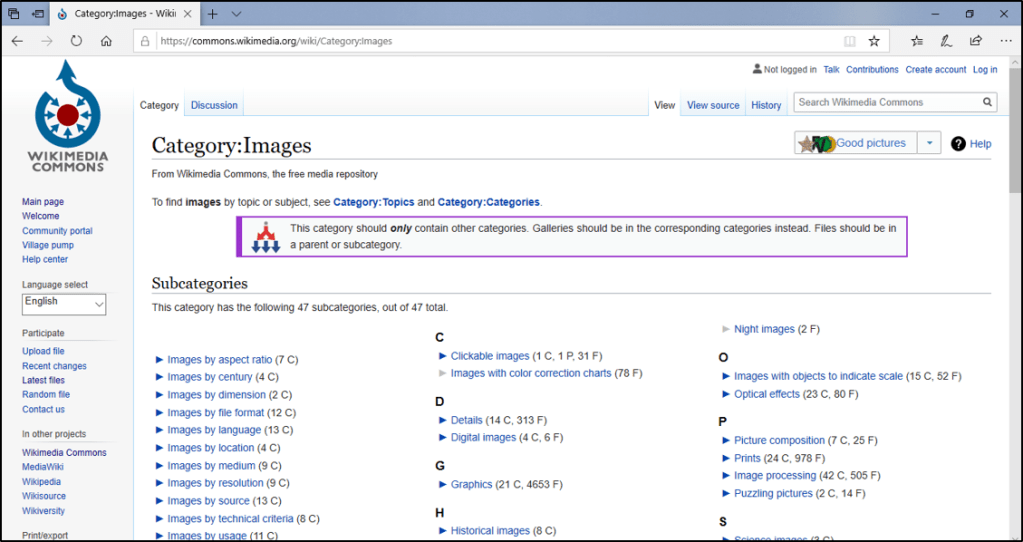
Wiki can very often provide a great alternative place to find supporting A/V files – both audio and visual.  As the illustration below suggests, these 50 million plus images are stored in well-catalogued and easy to find locations at various technical specifications.

What you need to know . . .

“Wikimedia Commons is a media file repository making available public domain and freely-licensed educational media content (images, sound and video clips) to everyone, in their own language. It acts as a common repository for the various projects of the Wikimedia Foundation, but you do not need to belong to one of those projects to use media hosted here. . . .

Launched on 7 September 2004, Wikimedia Commons hit the 1,000,000 uploaded media file milestone on 30 November 2006 and currently contains 58,541,226 files and 57,473,117 media collections. . . .

Unlike traditional media repositories, Wikimedia Commons is free. Everyone is allowed to copy, use and modify any files here freely as long as they follow the terms specified by the author; this often means crediting the source and author(s) appropriately and releasing copies/improvements under the same freedom to others. The license conditions of each individual media file can be found on their description page. The Wikimedia Commons database itself and the texts in it are licensed under the Creative Commons Attribution/Share-Alike License. More information on re-use can be found at Commons: Reusing content outside Wikimedia and Commons: First steps/Reuse.”

While much free content is available, you need (as mentioned above) to familiarize yourself with copyright or attribution issues that could be relevant to a specific image.  Often, the creator will allow usage at no charge but will very reasonably want to be given credit for authorship.  To be safe and in full compliance, study the licensing information made available at the Wiki site.

Other Places to Look

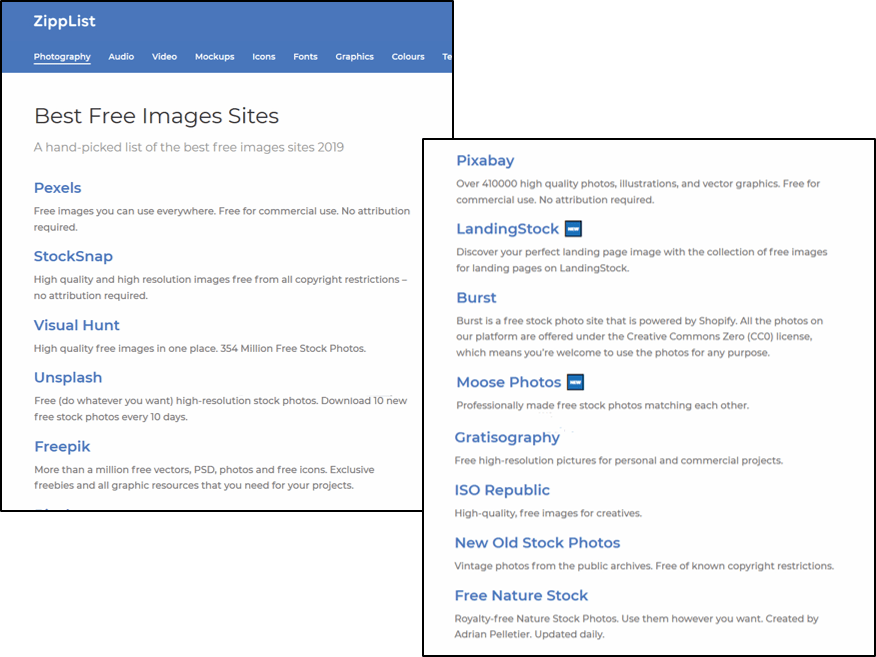
Frankly, the Internet provides access to an unbelievable wealth of image resources.  For example, I recently searched for the term: “Best Free Images of 2019.”  The following list was produced:

As you can see, a combination of “stock” photos, illustrations, videos, and sound files are available, and the resource can be more than adequate in addressing your needs.  (You can also find that some paid stock sites offer some very reasonable terms, especially for single images that might be the most suitable for a specific situation.)

While I have not had a chance yet to explore all of these sites at great depth, the very first resource I (gratefully!!) stumbled upon was “Unsplash,” which I highly recommend and found to be quite extensive and well organized with a good search function.  While free, optional attribution is appreciated but not required.  The images themselves are of an excellent quality and professionally prepared to meet most technical specifications you’d encounter.  As I go through others on the list, I expect to find many of them capable of meeting and/or exceeding your typical requirements.

When using these images, I presume most of you have an application  that can handle (and manipulate) these files.  If not, note the vector-based page-layout program Carole recommended in her article on logos – “Design Your Own Logo” (https://brandbuildingforsmallbusiness.com/2019/09/08/brand-basics-part-2-design-your-own-logo/).  Almost all computers now come with a package for manipulating photos (for example:  Microsoft’s Paint program).

A Picture Is (Sometimes) Worth a Thousand Words

 A visual element is always an extremely useful tool in almost any activity involving branding.  Images contain content that reinforce your message to your target audience . . . while artistic aspects of the image offer a message of their own about your style, expertise, and sensibility. 

Note:  The criteria you use for selecting images is sufficiently important to your brand to become part of your “Style Guide.”  That portion of the document should spell out image do’s and don’ts to be sure pictures reinforce the brand message you are working to create.

That said, never overlook the opportunity to incorporate custom artwork by taking photos (your phone likely has a great camera always available for that purpose) or even building an illustration of your own!!

Finding the Right Font: A Review of the Best Available Font Viewers

Since I’m writing this post during that unique period in between Christmas and New Year’s . . . when you have no concept of whether it’s Tuesday, Sunday, or even still December, I figured I would write about something that brings me great joy.  Fonts.  I am a collector of fonts.  I have ones that are beautiful, ones that are classic, straightforward, jovial, and downright odd.  I learned today I have 1,266 of them to be exact.  Most I know I’ll never use, but hundreds of them MAY get used . . . one day.  I am a font hoarder.

As a Christmas present to myself, I decided I would find a good utility for browsing my collection.  When I am trying to decide on the perfect font for a project, this very common, teeny tiny, one-font-at-a-time preview is not nearly sufficient:

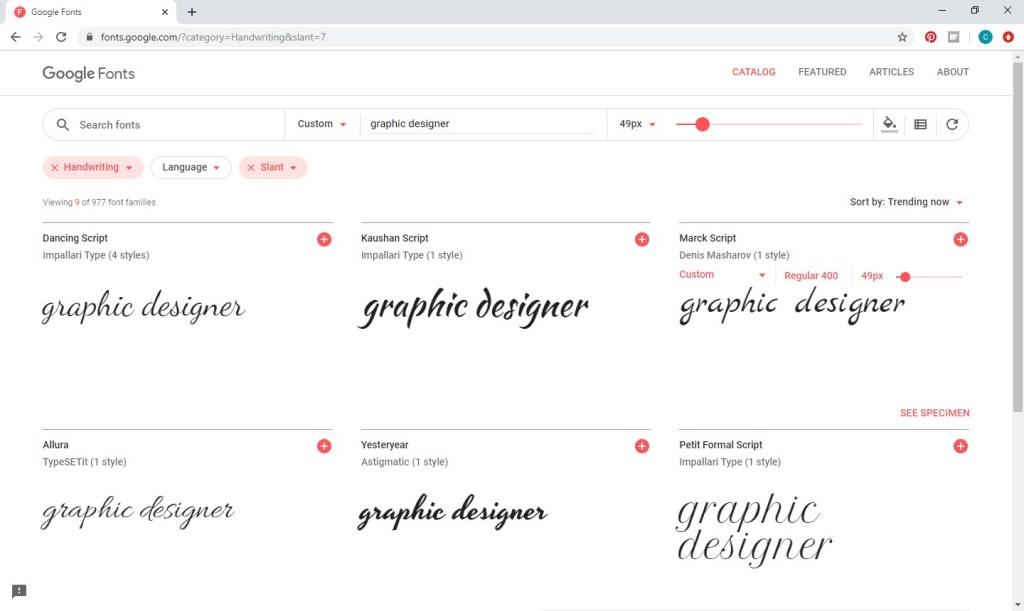
I went out seeking a utility similar to google’s font viewer . . . where I could type in my desired preview text and then browse the available options in an easy-to-see size and easy-to-scroll format.

If you are in the beginning stages of forming your brand, having a tool like this — to see your company name and test out body copy in all your currently installed fonts — would be a wonderful luxury.  Once your brand has solidified a bit, you’ll still have instances in which you’ll need to choose a different font for a specific need . . . whether you’re creating a Happy New Year graphic for social media or a “clearance” sign for display in your store. 

So I went looking for the best available font viewer.  I read a number of articles reviewing the options, and I sampled a select few of them based on the reviews . . . .

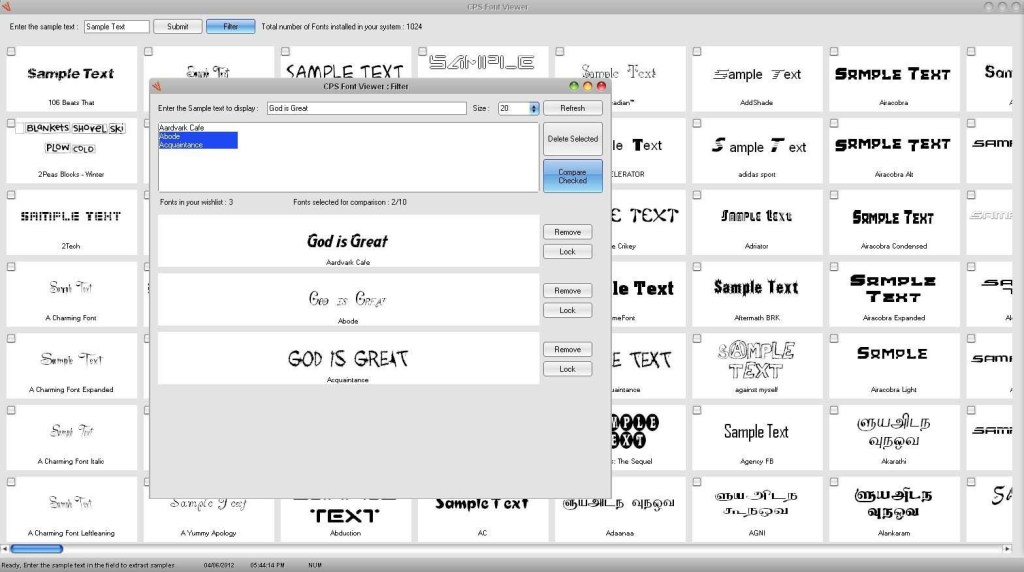
CPS Font Viewer
This program was my absolute favorite, checking all the essential boxes on my font viewer wish list, excepting the very important fact that my computer would freeze for about a minute every time I interacted with the program, which is designed for a 32-bit version of Windows.  (I’m guessing this is an important fact.)  Frustration prompted my uninstalling the program before even taking a screen shot for you, but I was able to grab one from the software provider:

If your computer is a rare gem running 32-bit Windows, this program is a great choice. 

FontBase

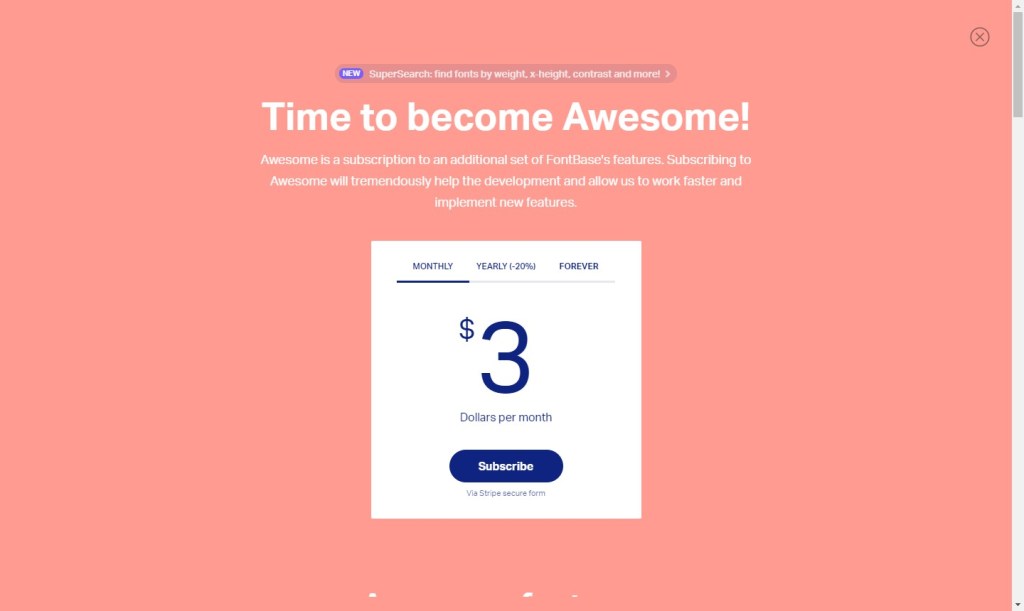
I initially really liked FontBase, performing the requisite job in a clean and modern interface.  I also like that you can easily switch from your fonts to Google’s selection of 2,533 free fonts as desired.  However, I really wanted to better utilize all that wasted screen space and increase the number of fonts I could peruse at a time.  Unfortunately, the ability to switch from a row view to grid style, along with a number of additional options, requires an upgrade and at a pretty hefty price tag at that.  Many seemingly functional buttons annoyingly transport you to this screen, where your options are $3/mo, $29/yr, or $180 forever. 

Since I try to resist the low-price allure of ongoing subscriptions whenever possible, I was left with the $180 option, which was about $100 more than I was willing to spend.  Goodbye, FontBase. 

If you don’t mind the free row layout and can quickly learn which buttons to avoid OR you’re willing to pay for the upgrade, this program is a solid choice.

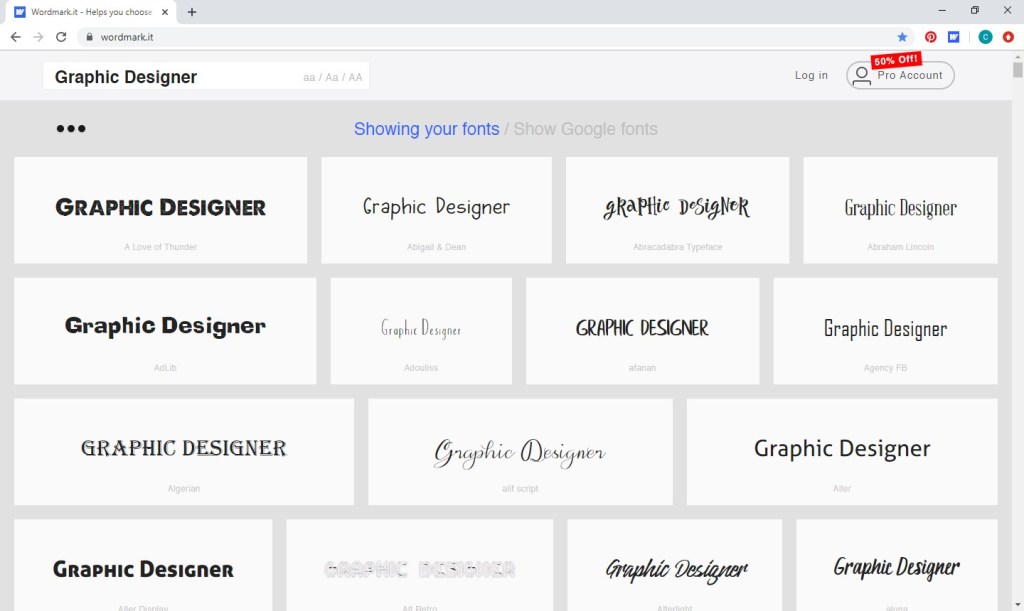
Wordmark.it

Another modern and clean interface that can also easily switch from your installed fonts to google’s free fonts, this viewer is a big step up, providing a grid layout entirely free of charge.  In fact, this is the only utility I sampled that is browser-based and didn’t need to be installed.  Your only required payment comes in the form of one font block dedicated to an advertisement every other screen or so – a very reasonable price to pay in my book.  However, this utility scans and previews your installed fonts using Adobe Flash Player, outdated software that Adobe has announced will no longer be supported as of December 2020.  I noticed a bit of a lag on the web page itself and even more inconveniently in my other software while accessing Wordmark.it.  (So going back and forth from discovering a possible font option on Wordmark.it to trying out the font in my project was not a smooth flow.)  Hopefully, the company will find a more current way to make this utility available, because it’s pretty slick otherwise.

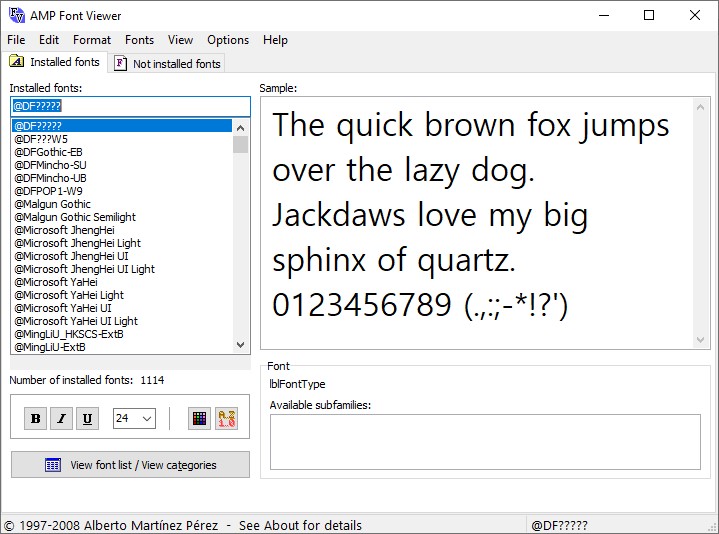
AMP Font Viewer

This program has an old-school feel.  The installation process and program interface are reminiscent of the good old days . . . Windows 97, 56k modems, and floppy disks.  I almost immediately wrote the program off as a result. 

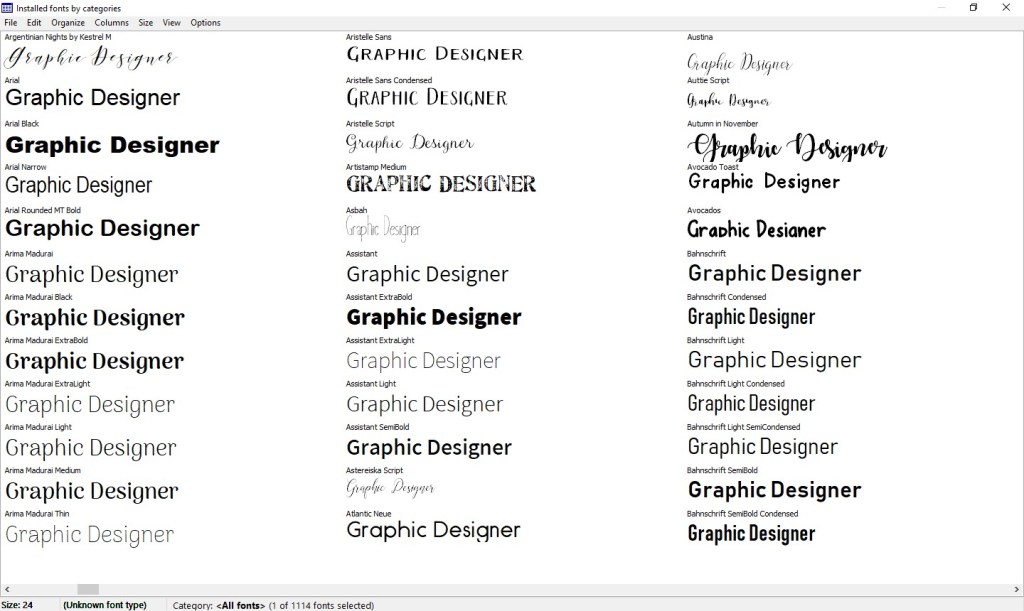
Upon browsing all the options in the program’s menu, I found that the view is almost completely customizable, and I was able to scroll through my 1,000+ font options with ease. 

Unlike the outdated Flash Player, this program’s age adds to its allure . . . not modern and clean but user driven and quick.  I happily declare my unlikely victor!

Do you have a favorite font viewer?  Let us know in the comments below.  Did you have an opportunity to try out one of the reviewed options?  I would love to hear your experience.